














F.A.Q.
In this section you can find a series of useful information for registering and attending classes at the Faculty of Economics
DOCUMENTS
What is the tessera sanitaria?
The tessera sanitaria is the national health card which can be used to access the Italian Health System. Students have a fixed contribution (150 euros) which once paid would give them access to the Public Health care for a year (from January to December). It provides one with a general practitioner who can be visited free of charge for any illness whatsoever. Moreover, the tessera sanitaria also acts as a European health insurance card providing you health insurance and facilities all over Europe.
Health Insurance
Health insurance is mandatory for all students for the entire course of their study and stay in Italy.
It is extremely important to have valid health insurance, as it is also required in order to apply for a residence permit within 8 days of your arrival in the country. Perhaps you already have health insurance, which was taken out in your home country and validated by the diplomatic representation prior to your departure.
If not, the two safest options are:
ENROLLMENT PROCEDURES FOR INTERNATIONAL STUDENTS
Statement of Comparability or Declaration of Value
In order to enroll in a course at the Tor Vergata University of Rome, foreign students holding a qualification achieved abroad have to submit a statement of comparability issued by CIMEA or a Declaration of value issued by the Italian competent authority.
Comparability refers to identifying the level of the foreign qualification based on the framework established by the Bologna Process and on the EQF (European Qualifications Framework). This does not ratify the formal recognition at University of Rome. However, it is a useful indicator for the evaluation of the qualification for the purpose of gaining access to higher education.
General Admission Requirements
Bachelor's Degree Programs
- When mandatory, pass the admission test or take the assessment test
- Hold a diploma obtained abroad after a minimum of 12 years of education and which allows you to enroll in a university in your country
- In case of a school education of less than 12 years, higher education institutions may alternatively request:
- The academic transcripts certifying the passing of all the exams foreseen for the first year of university studies in the case of the eleven-year local school system, or the academic transcripts certifying the passing of all the exams scheduled for the first two academic years in the case of a ten-year local school system.
- An official Italian or foreign post-secondary study qualification obtained in a nonuniversity higher education institution in a subject related to the chosen course, lasting one year in the case of an eleven-year local school system, or two years in the case of a ten-year local school system, respectively.
- Certificates from other Italian universities regarding the completion of a foundation course which compensates for the years of missing education.
The certifications for passing foundation courses can also be used in order to fill those additional requirements required for entry to the courses, which are different from the years of schooling, but in no case can they remedy the absence of a “Diploma of upper secondary school or other qualification obtained abroad, recognised as acceptable”.
A pre-school year can also be considered a 12-year equivalent if the attendance was compulsory and part of the curriculum, and also in cases where the pre-school program was provided with the teaching of reading and writing in the language of the given Country together with some basic mathematics.
Master's Degree Programs (two-year programs)
- Qualification obtained in a foreign university or a post-secondary qualification achieved in a non-university higher education Institute which allows you to continue your studies in the academic institutes in your country
Specific regulations are established for:
- USA qualifications (American High School Diploma), British qualifications, Greek qualifications and qualifications issued by Ecclesiastical universities located in Italy and approved by the Holy See (See Attachment 1 here)
- Italian qualifications obtained from schools in border areas or Italian sections of foreign schools, International Baccalaureate qualifications, qualifications issued from the Republic of San Marino, qualifications obtained from foreign schools in Italy or European schools (See Attachment 2 here)
Find the specific eligibility criteria of each academic program through the calls for applications published on their respective websites that are linked in this page.
Documents for enrollment
Documents needed for enrollment in a:
- Bachelor's degree program
- A true copy of either of the following:
- the final title obtained after at least 12 years of education together with the Statement of Comparability issued by the CIMEA
- the final title obtained after at least 12 years of education with official translation in Italian and validated by the Italian authorities in the Country of the educational system attended. This validation is not necessary if the certification presents the “Aja Apostille”; accompained by the original of the Declaration of Value of the final title issued by the Italian competent authorities for the territory.
- the alternative certificates for titles obtained after less than 12 years of education indicated in the admission requirements (previous FAQ)
- Copy of the certificate that states the student has passed the admission test for access to university courses if foreseen and mandatory in your home country (i.e. Selectividad in Spain, Prova de Aferiçao o Prova geral de Acesso in Portugal, etc.) together with an official translation in Italian and validated by Italian competent authorities. This validation is not necessary if the certification contains "the Aja Apostille".
- Copy of your residence permit (for non-EU students officially resident in Italy)
- Copy of your fiscal code
- Copy of your letter of admission, when required
- A true copy of either of the following:
- Master's degree program
- A true copy of either of the following:
- final academic title together with the Statement of Comparability issued by the CIMEA
- final academic title legalized or apostilled and officially translated into Italian and accompanied by the Declaration of Value issued by the Italian competent authorities abroad
- Transcript issued by the competent university which states the exams passed with an official translation into Italian and validated by Italian competent authorities; as well as, for each subject, a description of the programs attended to obtain the qualification in question. The transcript can be replaced by a “Diploma Supplement”.
- Copy of your residence permit (for non-EU students officially resident in Italy)
- Copy of your fiscal code
- Copy of your letter of admission, when required
- A true copy of either of the following:
Additional documents for enrollment for MARCO POLO students:
- Three passport-size photos
- Copy of your pre-enrollment with an authenticated signature of the Italian Diplomatic authorities in your Country
- Copy of the passport pages with your personal data and visa
- Copy of the Italian language certification (level not lower than B1)
ATTENTION: all documents in a foreign language must be provided with an official translation into Italian and consular validation (you can contact a local translator and then request the Italian competent authorities in your Country to certify the validity of the translation. This procedure is not necessary if the certificate contains “the Aja Apostille”).
EU and non-EU residents in Italy and Italian citizens with a foreign qualification
This category includes EU citizens (also Italians), equivalent and non-EU citizens with a residence permit, who have a foreign qualification. Citizens of Norway, Iceland, Liechtenstein, Switzerland and Republic of San Marino are considered as equivalent students; as well as refugees and holders of subsidiary protection status, including staff in service in Diplomatic Representations abroad and in international bodies located in Italy – accredited to the Italian State or the Holy See – and their dependent families (spouse and children).
If you are EU or non-EU citizen holding a residence permit (art. 26, law no. 189/2002) and a qualification obtained abroad you will be admitted to the university under the same conditions as an Italian qualification holder, hence with no limitations in terms of places available and without having to take an Italian language test.
Enrollment Procedures
- Start the application procedures on the Delphi platform
- Complete the steps of the application
- Select "print" to obtain the enrollment application and the list of documents that must be uploaded
- Take note of the CTRL and fiscal code
- Proceed by selecting point B "You have already filled out an application" in this section of the Delphi platform
- Insert the fiscal code and CTRL obtained in the previous steps
- Upload the required documents as an individual pdf file for each document
- Follow the steps for printing the postal order, online payment, validation and printing the ID number and the password that will be communicated via e-mail by the International Students Office after verifying the uploaded documentation
- Provide the documents uploaded via the Delphi system in original copy to the International Students Secretarial Office (Via Cracovia 50, block D, floor 0); non-EU citizens have to provide the valid residence permit, too
In the event of irregularities in the documentation provided relating to the foreign education qualification, the enrollment will be automatically cancelled ex officio.
Non-EU students not resident in Italy
This category includes students with citizenship of a non-EU Country and not resident in Italy, who are hence applying for a student visa.
- Before you leave
- Submit your pre-enrollment via the Universitaly website.
- Complete the procedures required by the chosen degree program such as enrollment in the admission tests or curricular evaluation.
- Submit the required documents to the Italian Competent Authorities. Check the list of required documents from the updated Student Guide.
- Once in Italy
- Take and pass the Italian language test, unless you choose a program that is entirely taught in English.
- Submit a residence permit request to the competent "Questura".
- Submit a fiscal code request to obtain a 16-digit alphanumeric code that will be useful for enrollment, opening a bank account, signing a contract and registering with the National Health System.
- Obtain a health insurance that is necessary for the residence permit application.
- Complete the enrollment procedures.
- Start the application procedures on the Delphi platform
- Complete the steps of the application
- Select "print" to obtain the enrollment application and the list of documents that must be uploaded
- Take note of the CTRL and fiscal code
- Proceed by selecting point B "You have already filled out an application" in this section of the Delphi platform
- Insert the fiscal code and CTRL obtained in the previous steps
- Upload the required documents as an individual pdf file for each document
- Follow the steps for printing the postal order, online payment, validation and printing the ID number and the password that will be communicated via e-mail by the International Students Office after verifying the uploaded documentation
- Provide the documents uploaded via the Delphi system in original copy to the International Students Secretarial Office (Via Cracovia 50, block D, floor 0); non-EU citizens have to provide the valid residence permit, too
In the event of irregularities in the documentation provided relating to the foreign education qualification, the enrollment will be automatically cancelled ex officio.
MARCO POLO Project Chinese students
The “Marco Polo” Project consists in a governmental agreement, between Italy and China, with the purpose of supporting the presence of Chinese students in Italian universities.
The students who participate in this project will have a chance to arrive earlier than other international students in Italy in order to learn Italian for 10 or 11 months (level of Italian required B2).
At the end of the course after passing the final test and the admission test provided for the admission to the chosen programme, students will be able to enroll following the procedures reported in the public call of the specific programme.
- Before you leave
- Submit your pre-enrollment via the Universitaly website before applying for the study visa
- Complete the procedures required by the chosen degree program such as enrollment in the admission tests or curricular evaluation.
- After the pre-enrollment, if an Italian language course is required for these Chinese students, is it recommended that the Italian language course duration is not inferior to 10 months (preferably 80/100 monthly hours) in order to guarantee a consistent and continuous exposure to the Italian language to obtain a B1 starting level with the aim of a progressive language skills improvement in the following years.
Tor Vergata University of Rome, as part of the Marco Polo Project, provides an 11-month Italian language and culture course for a total of 1.000 hours - In addition to the general admission requirements, passing the GAO KAO in China is required unless you are from Hong Kong and Macao.
- Once in Italy
- Submit a residence permit request to the competent "Questura".
- Submit a fiscal code request to obtain a 16-digit alphanumeric code that will be useful for enrollment, opening a bank account, signing a contract and registering with the National Health System.
- Obtain a health insurance that is necessary for the residence permit application.
- Complete the enrollment procedures.
- Start the application procedures on the Delphi platform
- Complete the steps of the application
- Select "print" to obtain the enrollment application and the list of documents that must be uploaded
- Take note of the CTRL and fiscal code
- Proceed by selecting point B "You have already filled out an application" in this section of the Delphi platform
- Insert the fiscal code and CTRL obtained in the previous steps
- Upload the required documents as an individual pdf file for each document
- Follow the steps for printing the postal order, online payment, validation and printing the ID number and the password that will be communicated via e-mail by the International Students Office after verifying the uploaded documentation
- Provide the documents uploaded via the Delphi system in original copy to the International Students Secretarial Office (Via Cracovia 50, block D, floor 0); non-EU citizens have to provide the valid residence permit, too
Tuition Fees
The University has set up a system for calculating student fees as follows:
- an all-inclusive contribution that takes into account the ISEE-University, the Degree Course, the CFU acquired and the cohort.
- a fixed annual fee for non-EU students, for whom the ISEE calculation is inapplicable, in addition to the regional tax and the stamp duty. The DISCOLAZIO scholarship recipients are exempted from paying the regional tax only.
Check the Student Guide or the call for applications of courses to find the updated tuition fees for the academic year.
Payment method for fees - PagoPA
The PagoPA system guarantees electronic payments to the public administration.
Payments can be made in the following ways:
- online using your credit card at utov.it/pagopa;
- via APP IO of PagoPA if you have SPID credentials;
- via home/mobile banking through the CBILL circuit or members of the PagoPA system;
- at all bank branches or ATMs that allow you to pay through the CBILL circuit or are members of the PagoPA system;
- in the Sisal/Lottomatica betting shops.
The updated list of all Payment Service Providers (PSP), where you can pay via PagoPA, can be found at the following link: https://www.pagopa.gov.it/it/dove-pagare/
After payment, the student must return to the Delphi reserved page and validate the payment.
Full or Partial Exemptions from Tuition Fees
Full Exemptions
- Students with disabilities (66% or higher)
- Victims of organized crime and terrorism, and injured people in the course of duty
- Political refugees
- Recipients of DISCOLAZIO scholarship
Non-EU students, who do not present the ISEE in conformity with art. 8 of the DPCM no. 159 dated 2013, are required to pay the fixed annual contribution even if in possession of the DISCOLAZIO scholarship (the recipients of the DISCOLAZIO scholarship are not required to pay the regional tax). - Foreign students with scholarships granted by the Italian government
- Students with an Italian high school grade of 100/100 (first year only)
- Winners of the National Mathematics Olympics and similar initiatives
- Olympic medalists
Partial Exemptions
The reductions in force for partial exemptions cannot be accumulated. Furthermore, please note that these reductions cannot be added to the 30% discount foreseen for part-time courses.
- Students with disabilities between 46% and 65%
They are entitled to a 20% reduction on their second installment. - Students with siblings currently enrolled at Tor Vergata University of Rome
Each sibling is entitled to a 10% reduction of the second installment, if their ISEE-University is equal to or lower than € 40 000. - Employees of the Tor Vergata University of Rome
They will have an automatic right to a 50% reduction in university fees regardless of their income level. - Children of Tor Vergata University of Rome employees enrolled at the university
Students are entitled to a 50% reduction of the second installment if they have at least one parent working for the university with an open-ended or fixed-term contract with an ISEE-University of no more than €50 000. - Students residing in Italy outside of the Region of Lazio
Students who officially reside in Italy outside of the Lazio region are entitled to a 5% reduction of university fees. - Students with a bachelor's degree final grade of 110/110 who decide to enroll in a master's degree course
A 10% reduction in university fees is foreseen for students who have graduated at the Tor Vergata University of Rome or another Italian university with a final grade of 110/110 and who decide to enroll in a master's degree course. - Olympians
Students participating in the Olympic Games are entitled to a 30% reduction of the "all-inclusive" tuition fee. - Maternity
During maternity, students can decide to interrupt their studies. Should students opt for this possibility of a one year break, the starting point will be based on the date of birth of their child. Mothers, from this date, will be able to choose within the following three years when exactly to exercise this right. Students deciding not to interrupt their studies for maternity reasons are entitled to a 30% reduction of university fees foreseen for their degree course for one year. Please note that it is possible to apply for this reduction by no later than 31st December.
UNIVERSITY
How to find the schedule of lectures?
You may consult the following page to see the timetable of lectures of the day for the whole School of Economics:
To check the timetable for a specific program, you may find the schedule on the website of the program. The website for each academic program can be found in the following page:
How to find the rooms for lectures or exams?
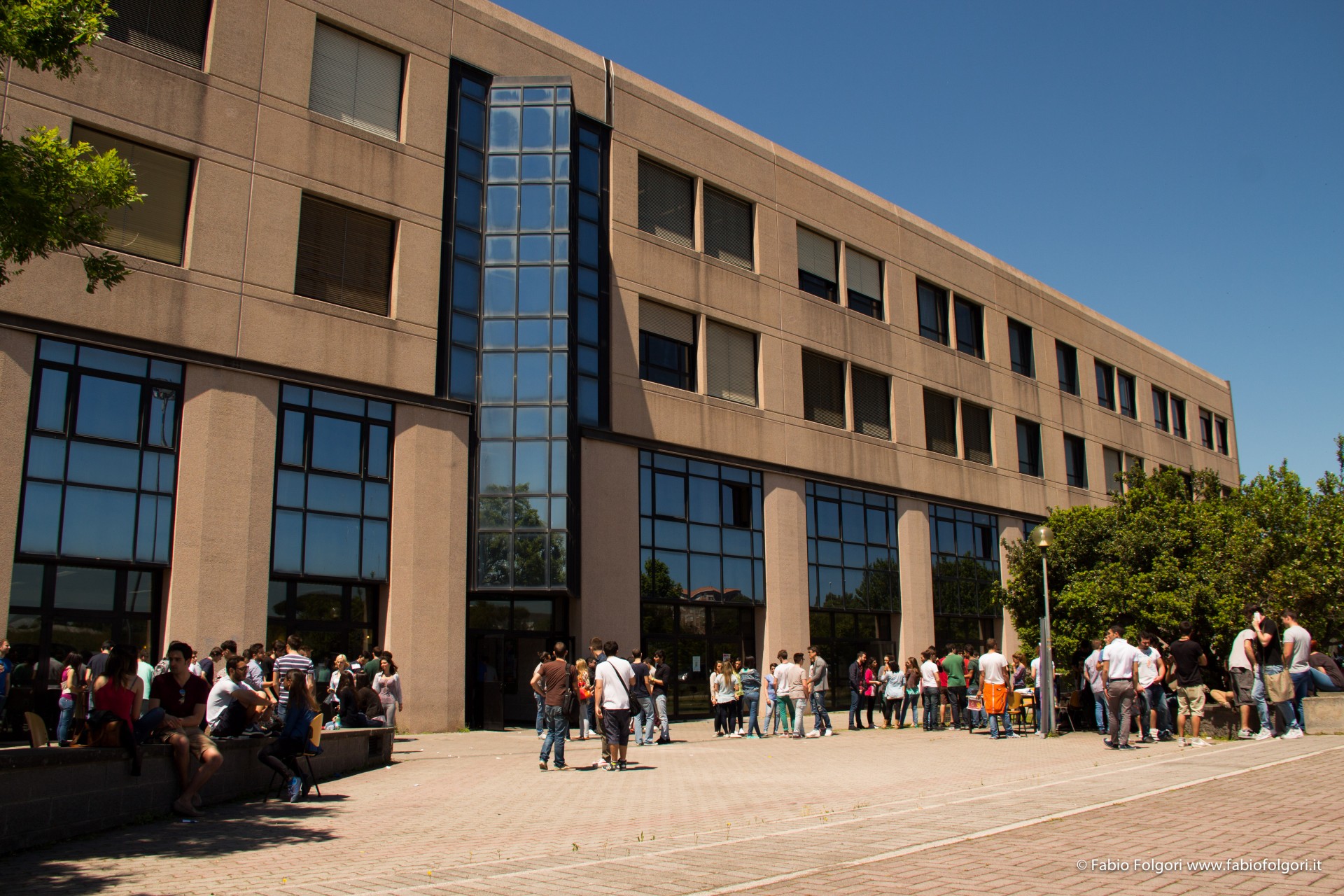
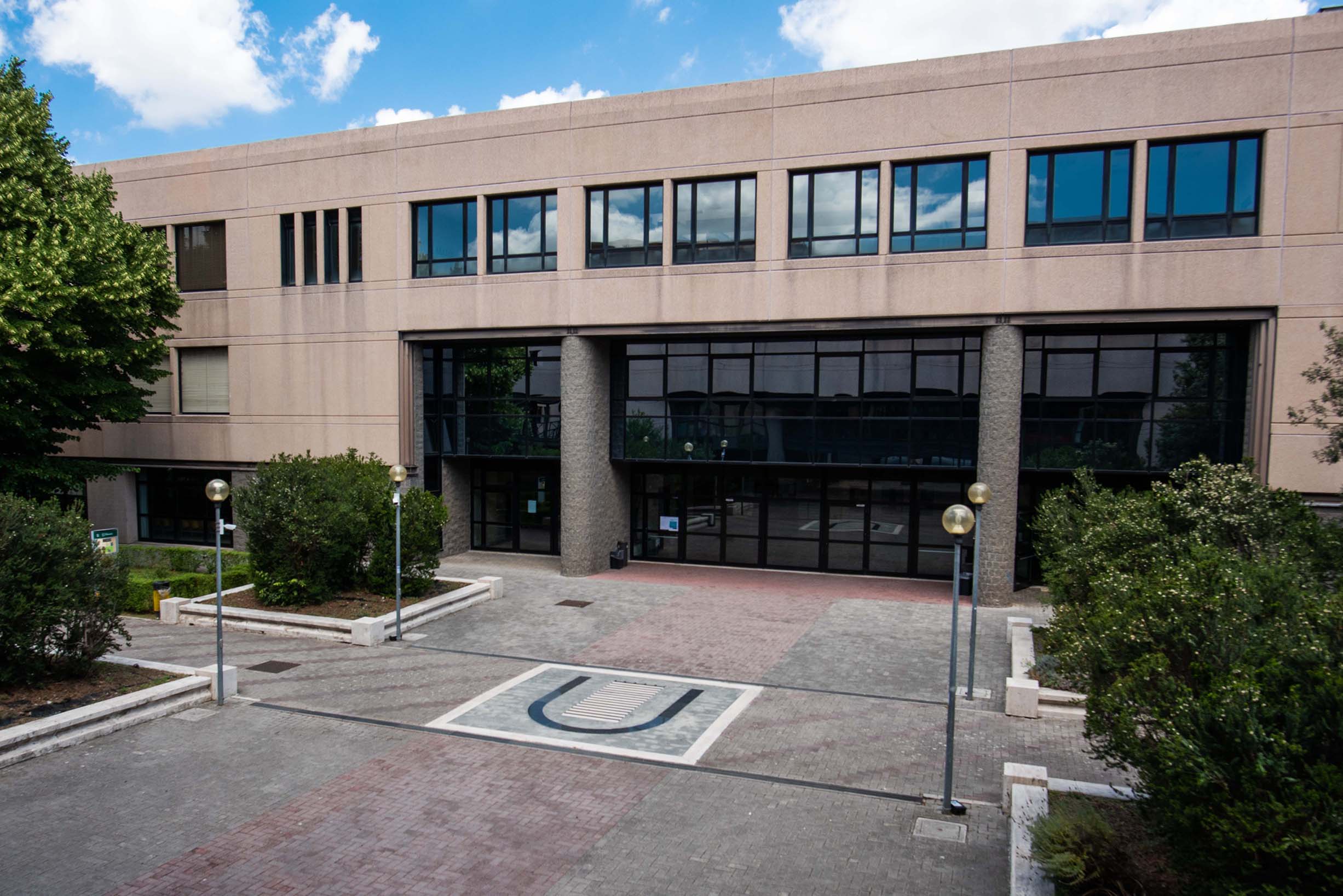
The rooms for lectures or exams are indicated on the timetable or on the screens at the entrance area of both buildings. Building A is primarily where lectures and events are held. The rooms are named with a letter and a number. The name of the room can be interpreted as:
Letter
- I - -1 Floor
- T - Ground Floor
- P - 1st Floor
- S - 2nd Floor
Number
- Even numbers - Right wing
- Odd numbers - Left wing
There are 3 multimedia rooms used mainly for events:
- Sala Consiglio - Building B 2nd Floor
- Aula Tesi/TL - Building A Ground Floor
- Aula Magna - Building A Ground Floor
What does it mean when I have different rounds of examination?
The system of exams foresees three different sessions (sessioni): two sessions are scheduled following the end of each of the two semesters and one session is scheduled in September. Each session consists of two rounds (appelli) or two different exam dates that are usually separated by two weeks. Students can decide which exam date to book within each session. In case the student rejects the grade (or fails) of the first or second round, they can take the exam again in September session before the fall semester begins.
How to book an exam?
Exams are booked on the Delphi platform. Students have to login to the Student Section of the platform then select "Examination Booking" or "Prenotazione esami". Select "Book examination" then choose the exam date of the course you want to book. Complete the survey about the course and finalize the exam booking. The booking period for an exam date ends a few days before the exam date itself.
What are the language requirements for different courses?
Different courses may have different language requirements which could be found on their websites but a minimum level of B1 is required in the language in which the course is being taken.
Where can I find study rooms at the School of Economics?
There are three study rooms at the ground floor, 1st floor and 2nd floor of Building A and one study room at the ground floor of Building B. The study rooms may be used for group works and discussions. For a quiet environment, it is recommended to go to the Vilfredo Pareto library. The SED Computer Room, which is located in the ground floor of Building B, is also available for studying and provides spots with or without computers.
What is the Libretto di Iscrizione? What do I do if I lose it?
The Libretto di Iscrizione is the booklet where all your grades are entered. It can also be used as your student ID. You will receive one at the start of the year once the enrollment process is complete. In case you misplace the libretto you are obliged to report it and get a replacement.
Can I buy lunch at the University?
Most schools have a cafeteria or a bar in their premises which offers a wide range of choices. Moreover, the University also has a canteen (mensa) where one can get tasty food at an affordable price. The University mensa can be found at the following address: Via Cambridge, 115, 00133 Roma RM, Italy. Download the DISCo Mensa App, available both on Android and iOS, and register in order to gain access to discounted meal prices based on your family income.
How to reach the School of Economics with public transportation?
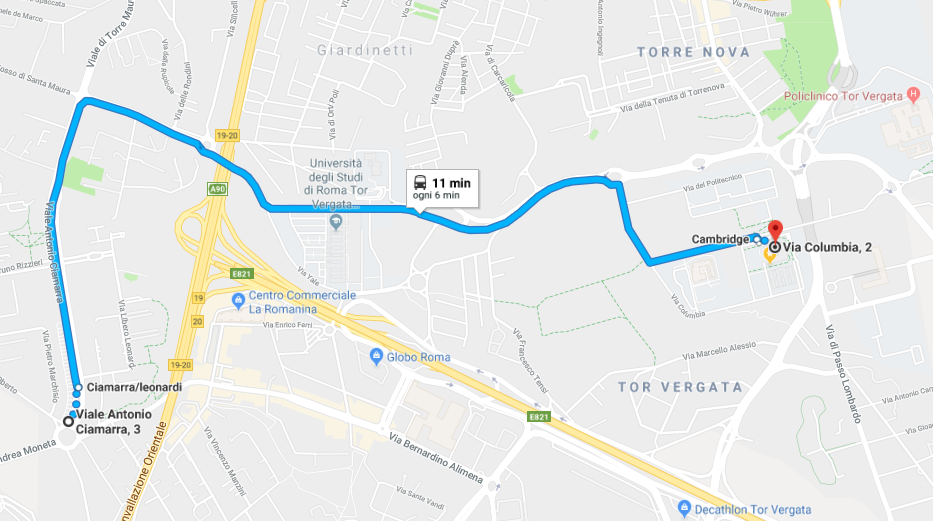
Students can take the 20 or 20L bus from the Anagnina station of the Metro A line. The other bus lines that connect the School of Economics with the surrounding areas are 552, 506, 507 and 509. There is also a free shuttle bus service provided by the University that connects the various schools of the University with the Tor Vergata train station, the Metro A Anagnina station, the CX Place and the Metro C Torre Angela station.
Students can purchase tickets and passes for the public transportation network of Rome. The monthly pass costs €35 and the yearly pass costs €250. Find information here on where to purchase tickets and passes.
Which are the different courses available at the School of Economics for undergraduate and graduate students?
You can find all the courses here.
IT SERVICES
I lost my DIDA password
To reset your DIDA password, follow the steps on this page.
You would need your matricola number or your university email.
I lost my Delphi password
To reset your Delphi password, follow the steps on this page.
You would need your Fiscal Code and your matricola number.
How can I activate my university email?
To reset the password, do the following:
- Login to the Students section of the Delphi platform
- Select "Activate Other Services"
- Select "Launch Microsoft Office365"
- Select "First Activation/Reset Password"
- Click "Reset"
- Set a password and confirm
I lost my university email password (@students.uniroma2.eu)
To reset the password, do the following:
- Login to the Students section of the Delphi platform
- Select "Activate Other Services"
- Select "Launch Microsoft Office365"
- Select "Set/Reset Password"
- Click "Reset"
- Set a new password
How can I access the Office365 services?
To access the Microsoft Office 365 services offered by the University for free, login to the Microsoft portal with your university email and corresponding password.